
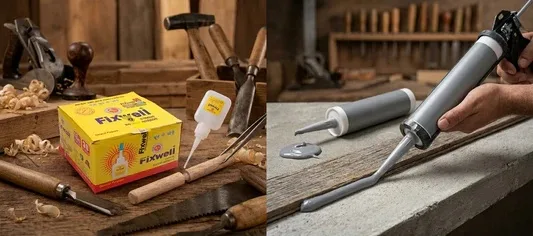
Sealant vs adhesive: the short answer
An adhesive is primarily chosen to bond two surfaces and hold them together. A sealant is primarily chosen to close a gap, protect a joint or help resist water and air movement. Some products can support more than one task, but the application should decide the product.
Adhesive and sealant: the practical difference
- Adhesive: choose it when the main job is bonding two clean surfaces or fixing an item in position.
- Sealant: choose it when the main job is closing a gap, protecting a joint or helping reduce moisture and air entry.
- Selection factors: check the material, expected load, water exposure, movement, flexibility and curing time before applying a product.
Which Fixwell product may suit the job?
- For no-drill fixing, home installation and suitable mounting work, see Fixwell Zero Drill Silicone Glue.
- For controlled bonding on PVC, furniture, interior and precision applications, see Fixwell Ultra High Viscosity Gel.
- For gap, joint and waterproofing work, see Fixwell Waterproof Sealant.
- For filling, rebuilding and repairing metal, plastic, pipes and other damaged areas, see Fixwell Epoxy Putty.
Application checklist
- Clean and dry the surface; remove dust, oil, grease and loose material.
- Match the product to the job: bonding, gap filling or sealing.
- Apply the recommended quantity and keep the joint in position.
- Allow the product to set and cure before loading it or exposing it to water.
For product selection or supply support, contact Fixwell with your city, product requirement and expected quantity.